Framework for Resilience at FACT LIVERPOOL
Art Monthly, April 2021
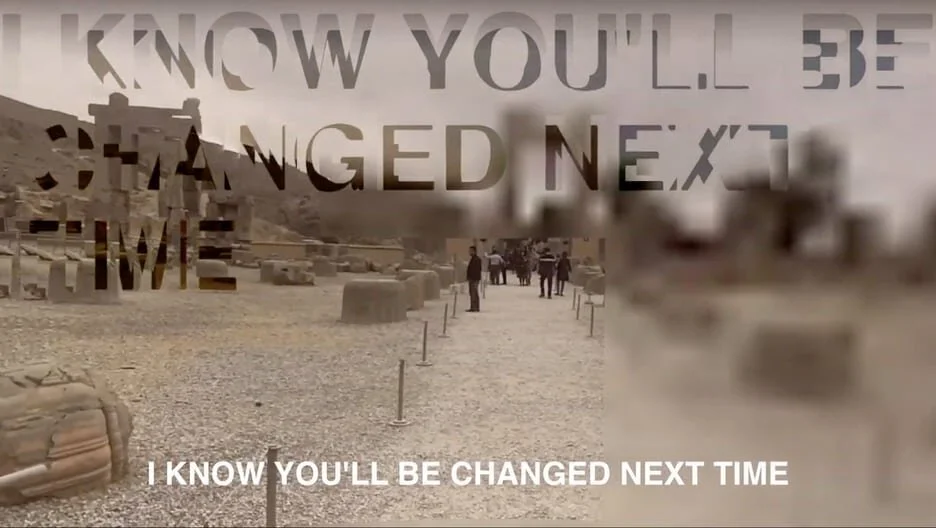
Nil00 (VS. Yank Scally), GULF, 2020
Creating a ‘Framework for Resilience’ is a tall order, particularly in a year that has depleted the resources of even the most resilient. With contributions from activists, artists, researchers and educators, Liverpool’s FACT presented a series of webinars which pivoted around the question of how we can create such a framework in the looming shadow of ecological crisis and with extractivist capitalism breathing down our necks. The sessions focused on how environmental degradation cannot be disentangled from racial injustice; issues which are cemented by the histories and legacies of colonialism.
Although it is essential to define the world we want to live in and to chart a route to get there, the panel discussion format can pose problems. Discourse only gets us so far: there is a fine line between providing momentum for change and oxygenating an echo chamber, rendering us stagnant in our own outrage. But these issues are thoughtfully addressed in the series, particularly in FACT’s considered programming of events and platforming of speakers with lived and professional experience of racial injustice and migration, and the practices of indigenous communities. The panellists spoke directly about issues of access and the violence in speaking for, rather than alongside, the oppressed. In the third and final session, artist Jessica El Mal reminded the audience and the panellists that, for many people, extractivist capitalism is the aim and that, ‘in order to have people living frictionlessly in the world, we have to have people living in friction’. Not everyone agrees that the world we live in is in crisis ecologically, socially and politically; many believe that we are exactly where we are supposed to be.
The first session, Ecological Empathy, focused on the importance of rest, care and, as the panel’s moderator Luiza Prado de O Martins put it, ‘the miracle of surviving and continuing in a system that is made to disavow the lives of certain people’. Edna Bonhomme, writer, cultural worker and historian of science, spoke knowledgeably and articulately about discrimination in the medical community and how the discourses around Covid-19 cannot be separated from histories of colonialism, ‘the legacies of which allow some people to be made perpetually ill through inequality’. The session’s emphasis was on unlearning, specifically the point that unlearning colonial attitudes is an active practice that we all have the responsibility to undertake.
The second session, Climate Justice from De-Colonialist Perspectives, although somewhat gimmicky in its format of ‘story sharing around the digital campfire’, provided a rich dialogue about ecocide. The panellists, with wide ranging backgrounds in art, law and writing, discussed what we can learn from indigenous cultures’ relationships to the environment and ancestral knowledge, where the land is seen almost as an elder – an entity to live alongside collaboratively and harmoniously – rather than a resource to extract from. If we consider the environment as an intrinsic part of ourselves, we cannot distinguish its destruction from our own; ecocide is more akin to suicide.
The generosity of the panellists in all the sessions, and the Migration and Adaptation session in particular, worked to animate the injustices discussed. Conversation emerged almost as stream-of-consciousness at points, implying a sense of safety and support in the series and its organisation. Artist Niloo Sharifi spoke pertinently about her relationship to her Iranian heritage and the power of the internet in enabling people to move beyond their locality; a medium that connects us yet is simultaneously the result of the extractivist technology which causes hierarchy and separation. This was followed by a screening of Sharifi’s work GULF, 2020, an exploration of nostalgia and homesickness through the combination of poetry, Google Earth images of Iran and music by Yank Scally, which the artist made when pandemic travel restrictions prevented her from visiting the country.
Ali Meghji’s contention in this final session that ‘it didn’t have to be this way’ was compelling. The way the world is now is a result of a multitude of contingent factors that began in 1492 with the advent of European colonisation and may take a long time to undo, time that we do not have in relation to the rapid escalation of climate change. This series does not offer an answer to how we reverse the world’s destruction – it never claimed it would. But it is a good place to start in the process of unlearning the colonial attitudes that underpin our systems of living. It offers a sense of community and common purpose that feeds resilience; the framework that might lead towards resistance.
Framework for Resilience took place online 11-25 February, FACT Liverpool